
Developing Physical Presence in the Classroom
Developing Physical Presence in the Classroom
Today I want to explore something that some people appear to have naturally, whilst others need to learn and reflect upon. It silently shapes everything that happens in a classroom: your physical presence.
Not what you say.
Not what’s written on the board.
But how you arrive, and show up in the room.
Before you read on, pause for a moment….
………………….
Drop your attention out of your head and into your body.
Notice where you are sitting or standing.
Feel your feet on the floor.
Notice the weight of your body being held.
That awareness — right there — is presence.
When you walk into a classroom, students register you long before you speak. Your posture, your pace, where you place yourself in the room, the quality of your attention — all of it communicates something. Especially in your first years of teaching, when everything feels new, your physical presence becomes one of your most powerful tools.
Why physical presence matters more than you might think
I remember how disembodied I felt in my early teaching years. My head was full — lesson objectives, lesson plans, behaviour strategies, timings, outcomes —I hardly noticed what was happening in my body. I hovered near the board, rushed between tasks, and often spoke more quickly than I realised. I was there, but not fully inhabiting the space.
What I didn’t yet understand is that leadership in the classroom is not just cognitive — it’s embodied.
As a new teacher with a theatre background, I was aware of how I needed to use physicality, facial expressions and my voice to play an authoritative role, but I was definitely not always feeling the part!
Students are exquisitely sensitive to adults’ physical cues. When you are grounded, still when needed, and deliberate in your movement, you signal safety and authority without saying a word. When you rush, fidget, or avoid certain areas of the room, students feel that too.
Your physical presence supports:
- your authority without needing to raise your voice
- calm transitions and clearer boundaries
- stronger connection with students
- a sense of containment and safety in the room
Occupying your space
In new environments, it’s natural to make yourself smaller — to perch, to stay close to resources, to move quickly as if apologising for taking up space. But the classroom is your space. When you confidently occupy it, students relax into their role as learners.
Try noticing:
- Where do you tend to stand when you’re unsure?
- Do you avoid certain parts of the room?
- What happens when you pause, plant your feet, and simply look around before speaking?
Stillness can feel uncomfortable at first, but it’s incredibly powerful. Often, doing less physically creates more impact.
Your body can do some of the work for you.
Presence as self-leadership
Just like breath, physical presence begins with self-awareness. When you’re tired, anxious, or overstimulated, your body will show it. This isn’t a failure — it’s information.
Self-leadership asks: What do I need to come back into my body right now?
Maybe it’s slowing your walking pace between lessons.
Maybe it’s standing rather than sitting when you need authority.
Maybe it’s taking one grounded breath before addressing the class.
To change the state of the room, we often need to change our own state first.
When you are physically present, you teach from a place of clarity. Your voice steadies. Your boundaries land more cleanly. Students feel held.
And this, too, is a skill — one you can practise and strengthen over time.
So I’ll leave you with this invitation:
Notice how you use your body tomorrow. Experiment gently. Take up space. Trust that your presence matters.
What helps you feel grounded and physically confident in the classroom? Is it posture, movement, stillness, breath? I’d love to hear what supports you, and what you might need more of as you grow into this role. Let me know your thoughts here.
This space will continue to be one where we explore the tools that help you lead with confidence, clarity, and humanity. You don’t have to figure it all out at once.
Here’s your takeaway for today: Your presence teaches before you do.
Warmly,
Sara

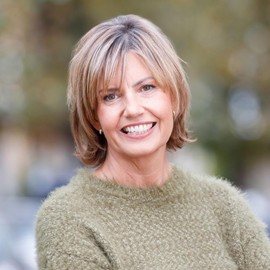
Sara is the Lead Coach at Metis. She is an experienced Leadership and Performance Coach, currently working with business leaders and educators. Sara taught and held leadership roles as a Drama specialist in schools in both the UK and Asia for over 25 years. She is passionate about combining her knowledge of drama with that of coaching as a methodology to promote wellbeing and confidence in the leaders she coaches. She lives in lovely Kingston, UK with her husband and 2 rapidly growing up sons.